|
7/15 |  |
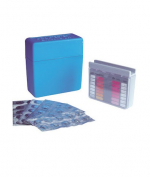
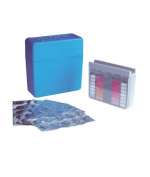
Astralpool Total Calcium Hardness Tester


Astralpool Total Calcium Hardness Tester
Description
Water hardness determines the content of dissolved minerals in the water. Read more
-
Astralpool Total Calcium Hardness Tester
Tester for measuring total calcium hardness. Water hardness is determined by the content of dissolved minerals in the water. These are mainly magnesium oxide, calcium oxide, as well as carbonates, sulfates, manganese, and iron ions. Pool water should not be extremely hard, as this reduces the effectiveness of chlorine-free disinfectants and also causes limescale deposits on the walls and in the pool piping. Limescale is an ideal environment for the growth of microorganisms and algae.
The ideal recommended water hardness value for pool water is moderately hard water, i.e. 8 - 14 °N / °dH. If the water is extremely hard, hydrochloric acid is recommended for dosing. Pools filled with well water mainly have a problem with hard water (water hardness can be higher than 40 °N / °dH).
The recommended range of pool water hardness is 175-300 g / m3 CaCO₃ or 9.8 - 16.8° dGH (German degrees of hardness), 1° dGH = 17.8 g / m3 CaCO₃.
WARNING: also pay attention to very soft water, which occurs in some locations or may result from improper use of water softeners. Very soft water can cause excessive foaming, especially in whirlpool baths.
We recommend measuring the water pH once a week. The pH value indicates the degree of acidity or alkalinity of a chemical substance. The ideal value for pools is 6.8 - 8.2. A pH higher than 8.2 leads to the formation of various mineral turbidity and the formation of limescale and other deposits. A pH lower than 6.8 causes corrosion of metal surfaces. The pH value affects the solubility and effectiveness of the disinfectants used.
-
Related products
Price incl. VAT: 7,00 GBPAvailability:
Price incl. VAT: 14,00 GBPAvailability:
Price incl. VAT: 14,00 GBPAvailability:
Price incl. VAT: 14,00 GBPAvailability:
Price incl. VAT: 18,00 GBPAvailability:
Price incl. VAT: 20,00 GBPAvailability:Extra zľava
Price incl. VAT: 687,00 GBPAvailability:Extra zľava
Price incl. VAT: 800,00 GBPAvailability: