|
13/26 |  |
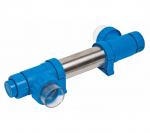
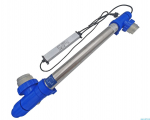
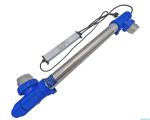
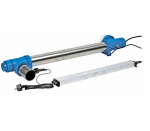
UV lamp Filtreau UV-C Select Amalgam 120 W


UV lamp Filtreau UV-C Select Amalgam 120 W
Description
UV lamps emit UV-C (ultraviolet) radiation with a wavelength of 253.7 nm, which has bactericidal effects (kills bacteria). Read more-
UV Lamp Filtreau UV-C Select Amalgam 120 W
UV lamps emit UV-C (ultraviolet) radiation with a wavelength of 253.7 nm, which has bactericidal effects (kills bacteria). Disinfection with ultraviolet radiation is among the technologies that are increasingly used to improve the treatment of drinking and pool water. The principle of disinfection lies in the photochemical damage of RNA and DNA, proteins, enzymes, and other biologically important macromolecules. The effectiveness of disinfection depends on the UV radiation dose, the type of UV lamp used, and its arrangement in relation to the direction of flow of drinking or pool water. To correctly select a suitable UV device, it is necessary to determine and ensure the required UV radiation dose, depending on the flow rate and water quality in terms of its permeability, i.e. the concentration and type of dissolved and undissolved substances that affect the reflection or absorption of UV radiation.
The sophisticated design and high-quality materials support intense UV-C radiation. This intense radiation destroys a significant portion of bacteria, viruses, and fungi, making it possible to reduce the amount of chemicals used by up to 80%. Smart electronics indicate when the lamp no longer produces a sufficient amount of radiation and needs to be replaced.
Smart low UV-C radiation indicator
Smart electronics signal when the bulb no longer produces sufficient radiation and needs to be replaced. Amalgam version with increased output and longer service life.
Advantages of the Filtreau UV-C lamp:
- Enlarged 90 mm lamp body, which slows down the flow
and therefore extends the disinfection time. - Energy-efficient and environmentally friendly
- Large reactor for longer contact time
- 35% more UV-C radiation thanks to reflection
- Easy installation
- Naturally clean water in the pool or pond
- Timer function
Package Contents
- stainless steel UV lamp housing AISI 316
- internal UV lamp 120 W
- connecting transformer
- connecting and grounding cable 0.5 m
- power cable 1 m
- 2x connecting fittings for 63 mm
Technical Parameters
- Max. water volume: 120 m3
- Power supply: 230 V
- Lamp: 120 W
- Lamp life: 12000 hours
- Max. flow rate: 25 m3 / h
- Max. pressure: 3 bar
- Connection: glue 63 mm
- Device length: 100 cm
- Warranty: 2 years
This warranty does not apply to the UV-C bulb or the protective glass.
- Enlarged 90 mm lamp body, which slows down the flow
-
Related products
Price incl. VAT: 231,00 GBPAvailability:Extra zľava
Price incl. VAT: 251,00 GBPAvailability:In stockExtra zľava
Price incl. VAT: 304,00 GBPAvailability:Extra zľava
Price incl. VAT: 322,00 GBPAvailability:Extra zľava
Price incl. VAT: 722,00 GBPAvailability:Extra zľava
Price incl. VAT: 300,00 GBPAvailability:Extra zľava
Price incl. VAT: 301,00 GBPAvailability:Extra zľava
Price incl. VAT: 505,00 GBPAvailability: