|
6/26 |  |
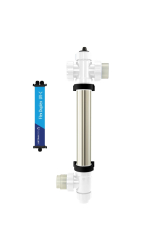
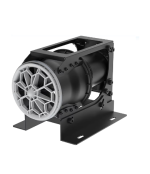
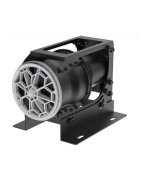
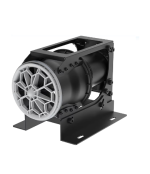
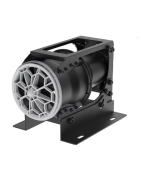
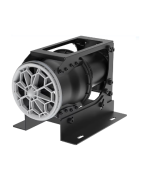
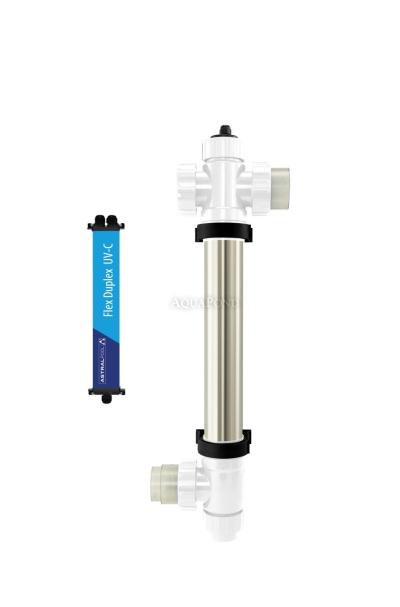
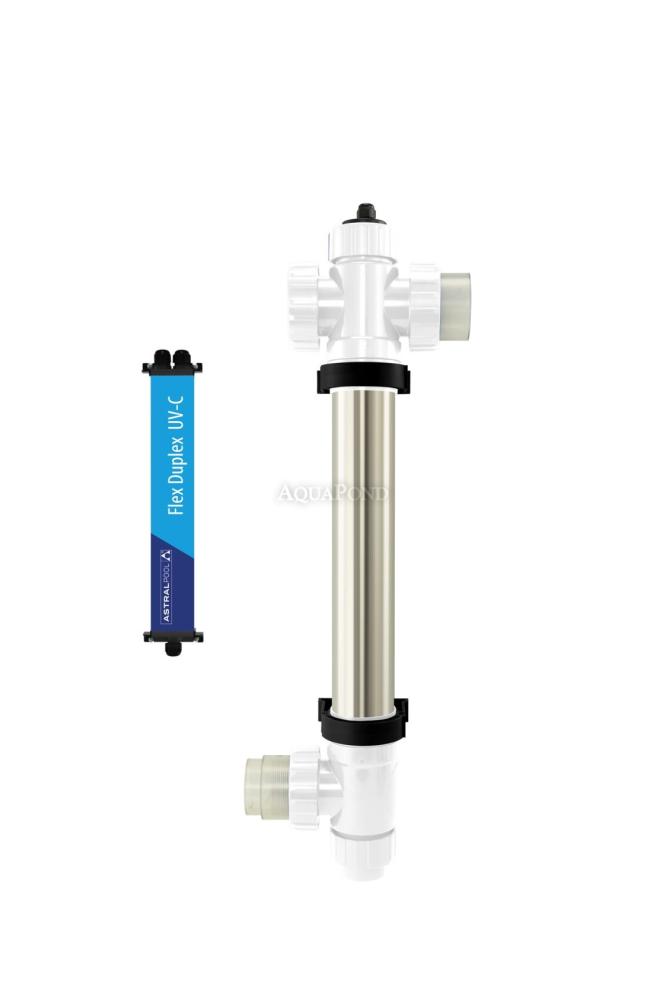
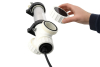
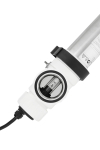
UV Lamp Astralpool Flex Duplex UV-C 21 W
 |
 |
 |
 |
UV Lamp Astralpool Flex Duplex UV-C 21 W
Description
The Duplex UV-C unit housing is made of duplex stainless steel, making these units suitable for pools using both chlorine and salt water with electrolysis. Read more-
UV Lamp Astralpool Flex Duplex UV-C 21 W
The Duplex UV-C unit housing is made of duplex stainless steel, which makes these units suitable for pools using both chlorine and salt water with electrolysis. Unlike standard 304 or 316 steels, the microstructure of duplex steel consists of 50% ferrite and 50% austenite. This alloy provides excellent mechanical strength and extreme corrosion resistance. In saltwater pools with electrolysis, the high salt content and the resulting free chlorine create a very aggressive environment that gradually damages standard stainless steel over time (pitting corrosion). The duplex structure provides complete protection against both salt air and water. This series is the perfect disinfection solution for professional pools.
Ultraviolet disinfection is one of the technologies that has been increasingly used in recent times to improve the treatment of drinking and pool water. The principle of disinfection lies in the photochemical damage of RNA and DNA, proteins, enzymes, and other biologically important macromolecules. The effectiveness of disinfection depends on the UV dose, the type of UV lamp used, and its arrangement in relation to the flow direction of the drinking or pool water. To select the correct type of UV unit, it is necessary to determine and ensure the required UV dose, which depends on the flow rate and the water quality in terms of its transparency, i.e. the concentration and type of dissolved and undissolved substances that affect the reflection or absorption of UV radiation.
The possibility of combining UV radiation with other treatment technologies leads to achieving high water quality. The advantage is reduced operating demands, i.e. savings on dosed chemicals and safe, simple operation in automatic mode. The disadvantage is the possibility of secondary contamination, so UV radiation alone is not suitable for hygienic protection. In practice, it is therefore combined, for example, with chlorination.
Advantages
- Equipped with 25 mm quartz glass with clamping joints (compression fittings).
- Extra-long cable between the ballast and the UV-C unit for optimal installation flexibility.
- The flow switch turns off the lamp in the event of insufficient water flow (not included with the 21 W Duplex version).
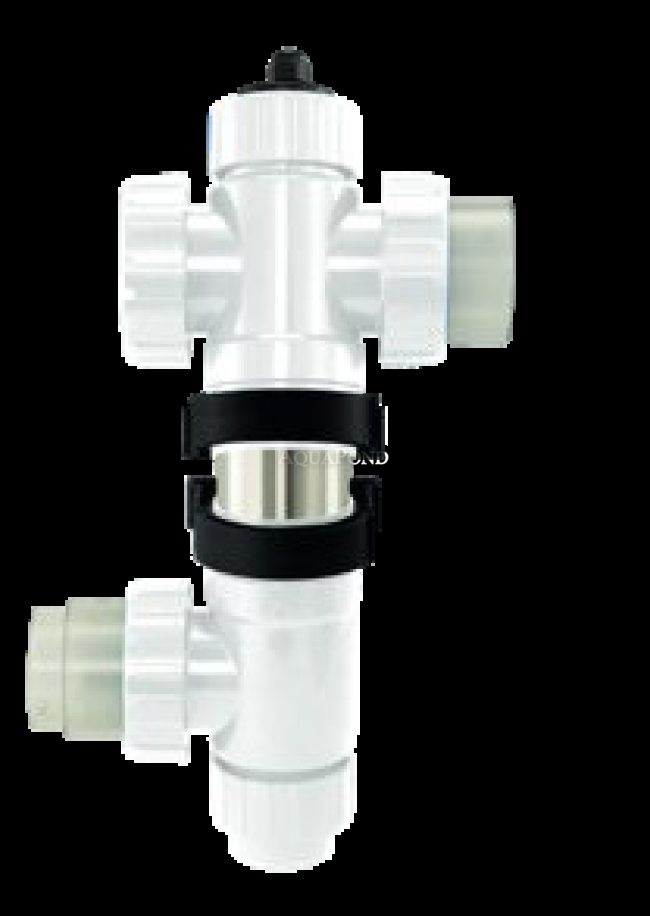
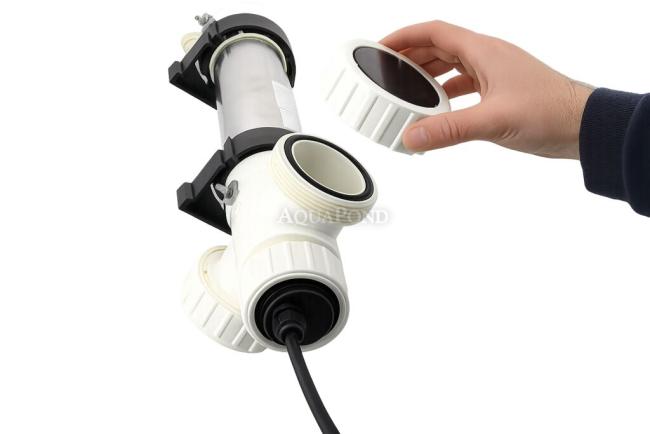
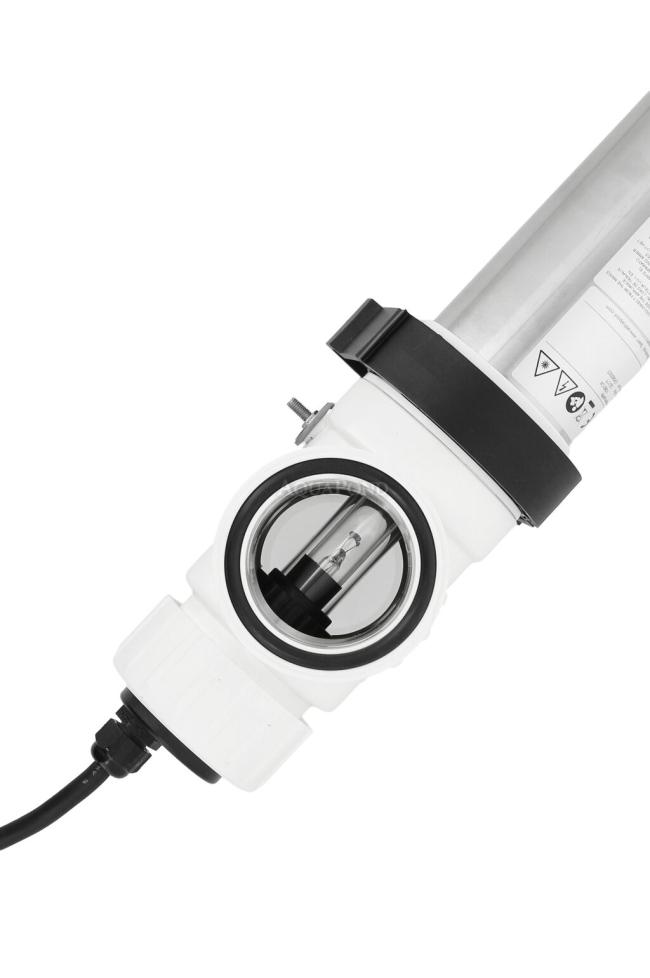
- Transparent lamp head for easy visual inspection of the lamp.
- UV-C lamp service life of up to 16,000 hours.
- Replaceable brackets allow easy horizontal and vertical installation.
- Easy installation and maintenance.
Technical Specifications
- Body material: duplex stainless steel
- Power supply: 230 V AC (50 / 60 Hz), max. 0.25 A
- Power: 21 W
- Max. flow rate: 15 m3 / h
- Max. working pressure: 2.5 bar
- Connection: 50 mm
- Lamp life: 9000 h
- Water temperature: 1 °C - 40 °C
- Protection rating: IPX5
- For salt water: yes
- Weight: 4.1 kg
- Warranty: 2 years
The warranty does not cover the UV emitter or the quartz glass tube in the event of breakage.