|
17/26 |  |
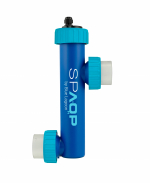
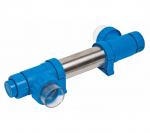
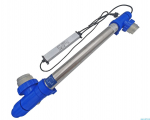
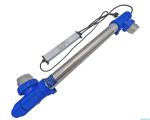
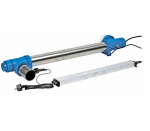
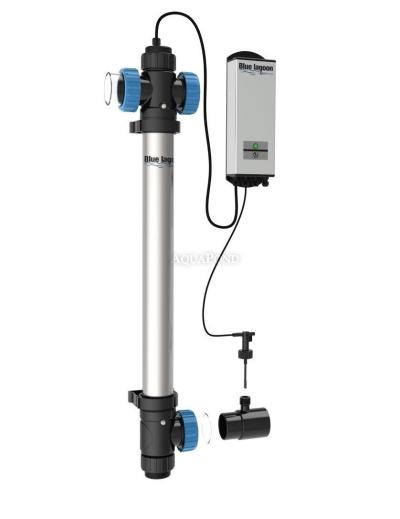
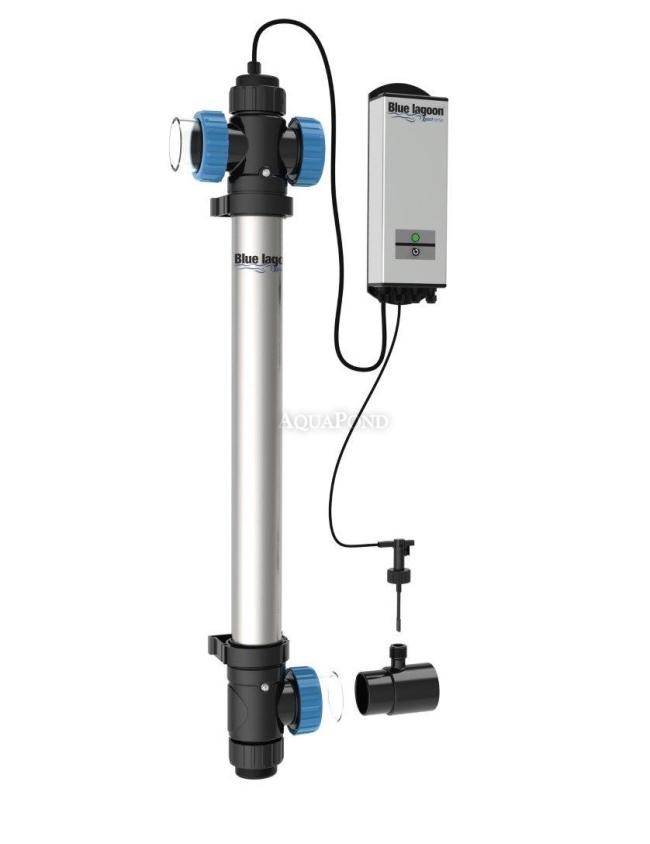
UV-C Blue Lagoon Duplex, 80 W
UV-C Blue Lagoon Duplex, 80 W
Description
Disinfection by ultraviolet radiation is among the technologies that are increasingly being used lately to improve the treatment technology of drinking and pool water. Read more
-
UV-C Blue Lagoon Duplex, 80 W
- The Duplex UV-C lamp housing is made of DUPLEX stainless steel, which makes it suitable for pools with chlorinated water treatment as well as saltwater pools
- LED lamp life indicator
Disinfection using ultraviolet radiation is one of the technologies that has been increasingly used lately to improve the treatment of drinking and pool water. The principle of disinfection lies in the photochemical damage of RNA and DNA, proteins, enzymes, and other biologically important macromolecules.
The effectiveness of disinfection depends on the UV radiation dose, the type of UV lamp used, and its arrangement in relation to the flow direction of the drinking or pool water. To correctly select a suitable type of UV device, it is necessary to determine and ensure the required UV radiation dose, depending on the flow rate and water quality in terms of its permeability, i.e. the concentration and type of dissolved and undissolved substances that affect the reflection or absorption of UV radiation.
Low-pressure monochromatic UV lamps emit UV radiation with a wavelength of 254 nm; the intensity of the emitted UV energy is only at one level and is strongly dependent on the temperature of the treated water and the flow rate. As a result, this type of low-pressure UV lamp has only germicidal effects.
The possibility of combining UV radiation with other treatment technologies leads to achieving high water quality. The advantage is lower operating demands, i.e. savings in dosing chemicals and safe as well as simple operation in automatic mode. The disadvantage is the possibility of secondary contamination, so UV radiation alone is not suitable for hygienic protection. In practice, it is therefore combined, for example, with chlorination.
Technical Parameters
- Power: 80 W
- Length: 1000 mm
- Diameter: 70 mm
- For pools up to: 80 m3
- Recommended water flow: 17 m3 / h
- Max. flow rate: 25 m3 / h
- Max. working pressure: 2.5 bar
- Weight: 5.6 kg
- Connection: 63 mm / 50 mm / 1 1/2 "
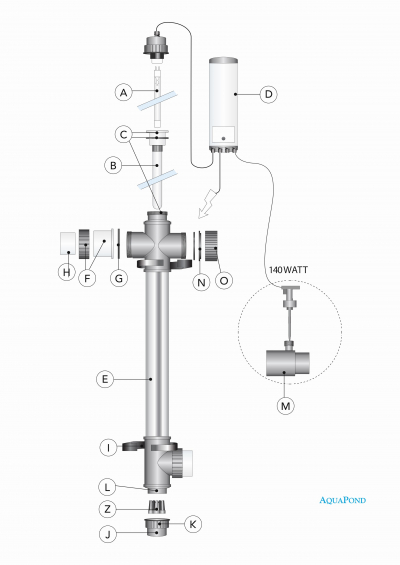
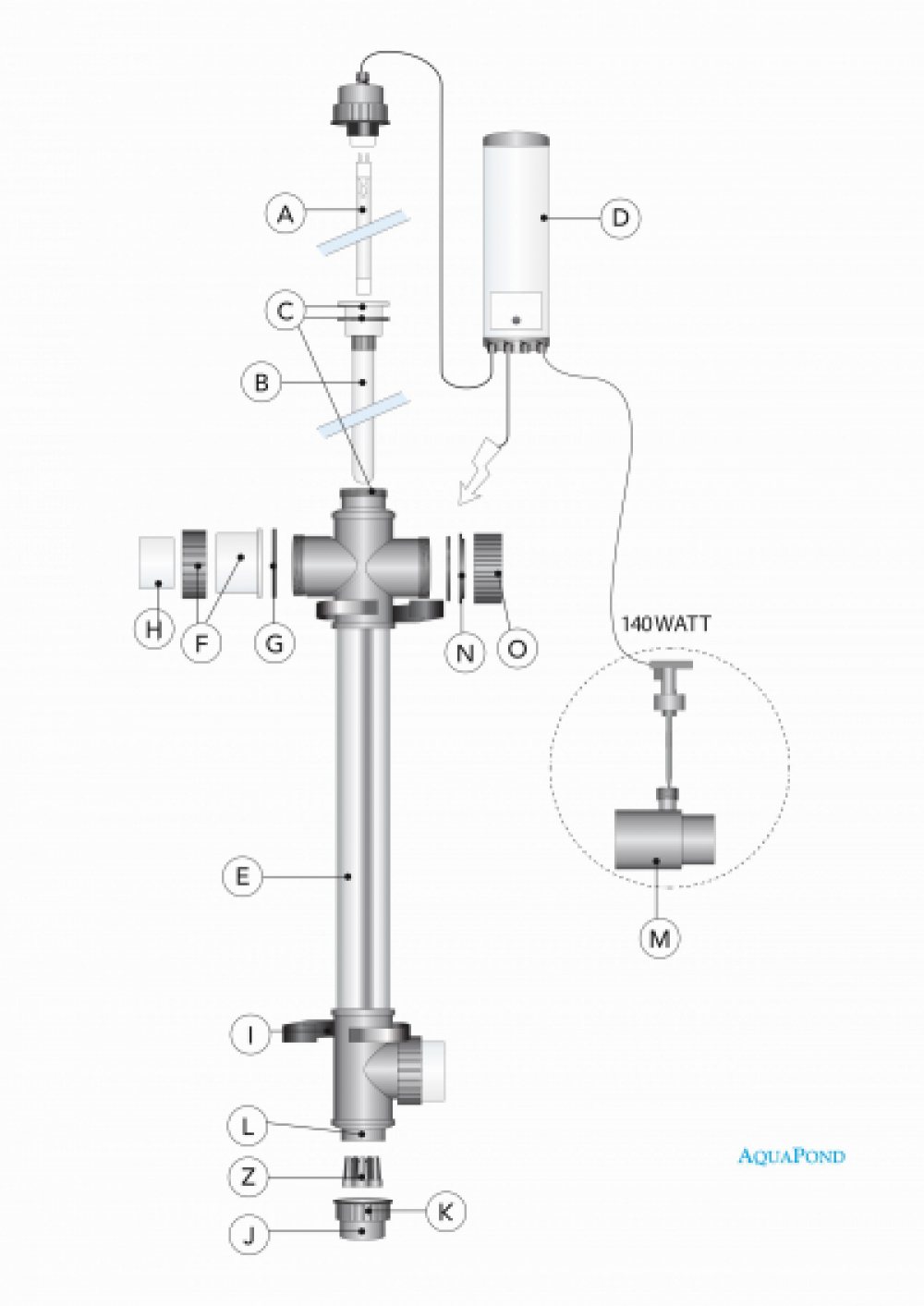
List of Spare Parts
The complete list of spare parts can be found here:
Spare Parts for UV-C DUPLEX, 80W
-
Related products
Price incl. VAT: 231,00 GBPAvailability:Extra zľava
Price incl. VAT: 251,00 GBPAvailability:In stockExtra zľava
Price incl. VAT: 304,00 GBPAvailability:Extra zľava
Price incl. VAT: 322,00 GBPAvailability:Extra zľava
Price incl. VAT: 722,00 GBPAvailability:Extra zľava
Price incl. VAT: 300,00 GBPAvailability:Extra zľava
Price incl. VAT: 301,00 GBPAvailability:Extra zľava
Price incl. VAT: 505,00 GBPAvailability: